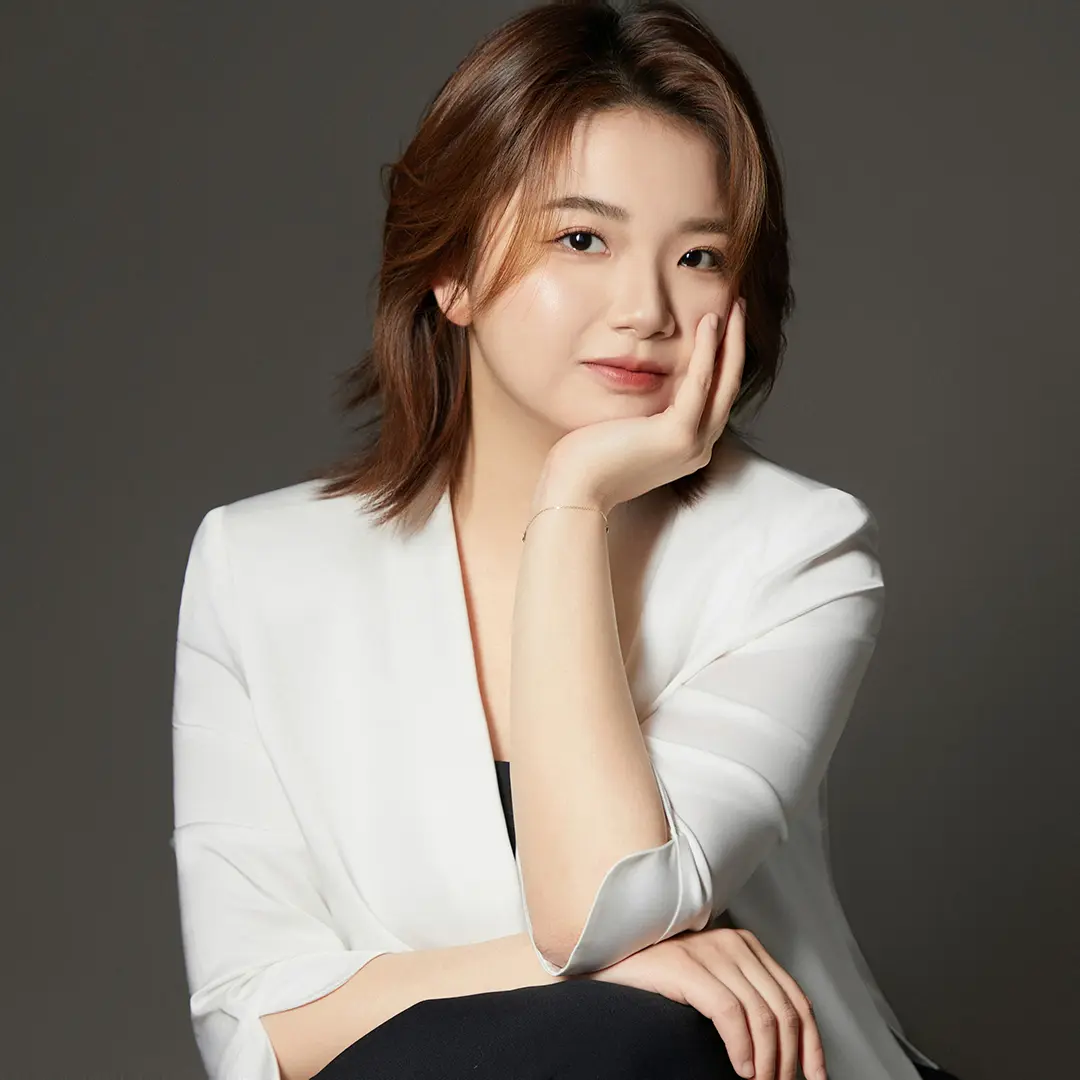
Protégé Recital Series: Claire Wells
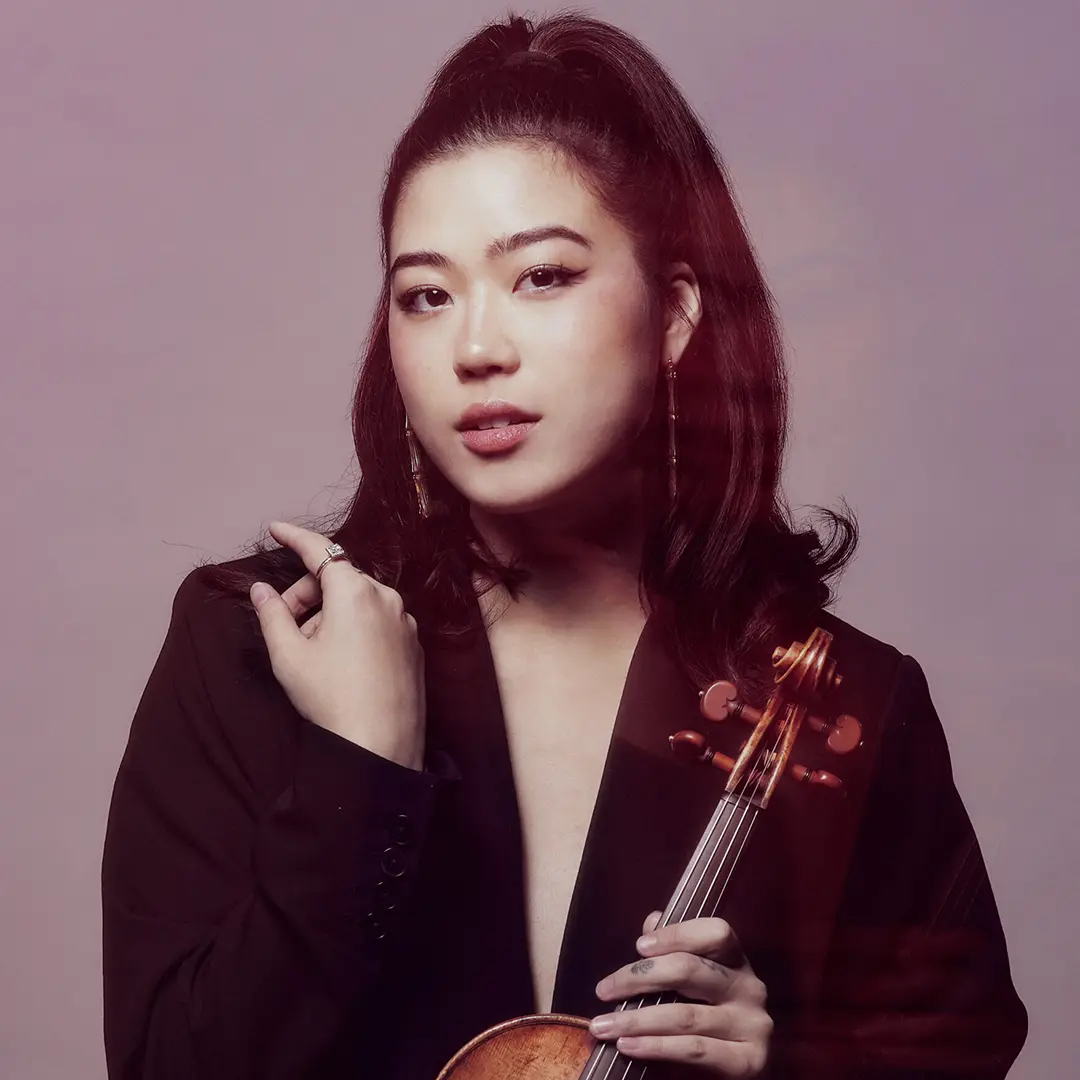
Our region has witnessed Claire Wells’s exuberant artistry several times since her 2024 Protégé Artist debut. Now, in just the past two years, Claire has won the Susan Wadsworth Young Concert Artists International Auditions and the Young Concert Artists Jacobs Fellowship, and has performed at dozens of festivals throughout the U.S. and abroad. With roots in Eugene and growing international recognition for her distinctive musical voice, vivid imagination, and dynamic stage presence, Claire continues to expand her performance footprint across Europe and beyond. For this special concert, Claire will be joined by three-time YAI Piano Fellow Pualina Lim for a recital of Debussy, Prokofiev, Brahms, and Bartók, sure to entertain and melt hearts in this intimate 100-seat venue.
This recital is approximately one hour.
The Protégé Recital Series is sponsored by Peter and Ann van Bever.
“A truly spellbinding young soloist” / “Every fiber of her being encapsulates the music”
— The Violin Channel“Beautifully smooth melodies and seamless chords…”
— From the Top
Irving Levin Performance Hall at All Classical Radio
Sunday, 10/4 • 4:00 pm
Program
Click on any piece of music below to learn more about it.
- CLAUDE DEBUSSY Violin Sonata, CD 148
Claude Debussy (1862–1918) Violin Sonata, CD 148 (1917)
I. Allegro vivo
II. Intermède: Fantasque et léger
III. Finale: Très animéDuring World War I Claude Debussy, suffering from a debilitating form of cancer, embarked on a project of composing six sonatas for various combinations of instruments. He completed three (the Cello Sonata of 1915; the Sonata for Flute, Viola and Harp of 1915; and the Violin Sonata of 1916–17), but was unable to finish the others before his death in 1918. His feelings toward the Violin Sonata were mixed at best: “I only wrote the sonata to be rid of the thing . . . [It] will be interesting from a documentary point of view and as an example of what is produced by a sick man in a time of war.”
Since then, however, audiences have found far more interest in the Sonata than Debussy anticipated. Having recognized that public taste moved in a traditional direction during the dire wartime years, Debussy adapted accordingly. A primary influence here is the music of César Franck and his “cyclic” form, in which melodies from early movements are recalled later in the work. The Allegro vivo opens with an austere introduction that evolves at moments into a tempestuous fury, with abstract fragments entering, receding, and returning throughout the movement. The enigmatic Intermède is at times jaunty and at others unsettling, using repeated notes as a constant canvas on which to interject pointed interruptions or beautiful melodies. The acrobatic Finale uses darkly mysterious chromatic scales, as well as melodies that seem to go in circles, fragmented, but recognizable.
—© Ethan Allred
- SERGEI PROKOFIEV 5 Mélodies, Op. 35bis
PROKOFIEV (1891–1953) 5 Mélodies, Op. 35bis (1920)
I. Andante
II. Lento, ma non troppo
III. Animato, ma non allegro
IV. Andantino leggiero e scherzando
V. Andante non troppoIn 1920, Russian composer Sergei Prokofiev set out for the United States with high hopes for what awaited him across the Atlantic. Unfortunately, his travels got off to a rough start. Not only had one of his suitcases been stolen, but the highly anticipated Chicago premiere of his opera Love for Three Oranges fell apart.
That December, eager for a change of scenery, Prokofiev journeyed to California to perform a series of piano recitals. He found himself astonished by California’s varied landscape and mild weather. As he wrote from Los Angeles, “I’m as ecstatic about California as it is about me.”
Filled with inspiration, Prokofiev put the finishing touches on Five Songs without Words for Voice and Piano, which would later become 5 Mélodies, Op. 35bis. Echoing Felix Mendelssohn’s Songs without Words, each song explores a different facet of the beauty of melody, radiating the contentment Prokofiev felt during his Californian sojourn.
—© Ethan Allred
- BRAHMS Violin Sonata No. 2 in A Major, Op. 100
JOHANNES BRAHMS (1833–1897) Violin Sonata No. 2 in A Major, Op. 100 (20’)
I. Allegro amabile
II. Andante tranquillo – Vivace
III. Allegretto grazioso, quasi AndanteCharacterized by gracious melodies and an easy partnership between violin and piano, the Violin Sonata No. 2 in A Major offers some of Brahms’s most idiomatic writing for the violin. The score is littered with his constant reminders: dolce, teneramente (tenderly), espressivo, sempre dolce. Even the tempo indication for the first movement spells out clearly the mood Brahms wishes to project: Allegro amabile – “Fast, [but with] love.” The movement begins with a graceful, flowing melody for piano, its phrases always answered by the violin. The violin soon picks up this melody and later shares the equally relaxed second subject with the piano.
The second movement combines the slow movement and the scherzo. The Andante tranquillo gives way to a tautly sprung Vivace, and these sections alternate through the movement. The music comes to a quiet close, then Brahms ends with a quick joke: a seven-bar fragment of the scherzo jumps up to bring the movement to its real close.
The violin has the stirring main theme of the concluding Allegretto grazioso. Alternating episodes grow more impassioned as the movement proceeds, but the noble main idea carries the music to its close.
—© Eric Bromberger
- BARTÓK Violin Rhapsody No. 2, Sz. 90
BARTÓK (1881–1945) Violin Rhapsody No. 2, Sz. 90 (1928)
I. Lassú: Moderato
II. Friss: Allegro moderatoBartók dedicated years to a systematic study of Hungarian and Romanian folk music. Working as an ethnomusicologist with his countryman Zoltán Kodály, Bartók identified folk melodies and regional characteristics, preserving them with wax-cylinder phonographs. He assimilated the folk-musical language so thoroughly, it was impossible to identify where the folk music ends and his original composition begins.
In 1928, Bartók wrote two Rhapsodies based on Hungarian Romanian Transylvanian folk-dance melodies. He orchestrated No. 2 in 1929 and revised it in 1944. Rhapsody No. 2 has two movements, following the Hungarian czárdas dance’s traditional pairing of a lassú (slow) and a friss (fast). Cummings in Allmusic commented: No. 2 “is more serious in its lightness, bolder in its good-naturedness” than No. 1.
The first movement, Lassú, Moderato, begins in a melancholy, improvisatory manner. The violin presents exotic, meandering melodies replicating folk fiddling, with expressive slides and double stops. The faster second movement, Friss, Allegro moderato, a vigorous, rhythmically syncopated dance with folk motifs, highlights the soloist’s technical capabilities. Bartók dedicated the work to Zoltán Székely, a renowned Hungarian violinist.
—© Susan Halpern
Artists
-
 Claire Wells
Violin, Past Protégé
Claire Wells
Violin, Past Protégé
-
Born in 2001, Claire Wells is an American violinist who is fast emerging as an original, distinctive musical voice on the international scene. As an artist, Claire’s work is shaped by an instinctive curiosity that guides her across periods and styles, drawing her toward music she finds genuinely compelling, from early repertoire to contemporary works.
Highlights in the upcoming 2026 season include Prokofiev’s Concerto No. 1 with the Illinois Symphony Orchestra and the Tchaikovsky Violin Concerto with the Maryland Symphony Orchestra, and past highlights include performing Kaija Saariaho’s Graal théâtre with the Finnish Radio Symphony Orchestra under the baton of Dima Slobodeniouk in May 2025, as well as working on and performing Jörg Widmann’s Etude No. 3 alongside the composer as part of CMNW’s 2024 Summer Festival.
As a soloist, Claire has performed with orchestras including the Dallas Symphony, Konzerthausorchester Berlin, the Fort Worth Symphony Orchestra, the Stuttgart Philharmoniker, Czech Orchestra Prague, Auckland Philharmonic, Helsinki Philharmonic, Indianapolis Symphony Orchestra, Webern Kammerphilharmonie, and the Finnish Radio Symphony Orchestra, working with conductors such as Leonard Slatkin, Dima Slobodeniouk, Pietari Inkinen, Robert Kružík, and Andrew Litton, among others.
Having won major prizes at many internationally renowned competitions including the Michael Hill, Sibelius, Mirecourt, Mendelssohn-Bartholdy, and Indianapolis violin competitions, Claire was the 2023 scholarship winner of the Mozart Gesellschaft Dortmund, and was most recently the winner of the 2025 Susan Wadsworth Young Concert Artists International Auditions.
Having always held a love and passion for chamber music, Claire appears at leading festivals such as Chamber Music Northwest, Chamber Music Connects the World in collaboration with Christian Tetzlaff and Steven Isserlis, the IMS Prussia Cove Open Chamber Music Festival in Cornwall, the Verbier Festival Academy, Tippet Rise Chamber Festival in Montana, and the Kryzyowa Festival in Kreisau, Poland. As well as performing regularly with top young artists of today, Claire has collaborated with many distinguished musicians, including Noah Bendix-Balgley, Christian Tetzlaff, Steven Isserlis, Gary Hoffman, Enrico Pace, and Nobuko Imai, among others.
Claire is represented worldwide by Young Concert Artists. She currently resides in Berlin, and is studying at the Kronberg Academy under the tutelage of Mihaela Martin, made possible by the Opel/Dr. Schaefer patronage. Claire Wells plays on a Nicolo Amati and a Grand Adam bow, on loan from a generous donor.
Upcoming Concerts & Events
- Protégé Recital Series: Claire Wells (currently selected)
-
 Pualina Lim
Collaborative Piano Fellow (2022, 2024, 2026)
Pualina Lim
Collaborative Piano Fellow (2022, 2024, 2026)
-
Singaporean pianist Pualina Lim Mei En is a passionate collaborative musician who has performed extensively across the United States and internationally, including in Singapore, Canada, Indonesia, and Japan. Pualina has spent three summers with Chamber Music Northwest’s Young Artist Institute as a Piano Fellow.
She has been featured on Oregon’s All Classical Radio and at festivals such as the Manchester Music Festival, Bowdoin International Music Festival, and Musical Chairs Chamber Music Festival, and is very happy to be returning to Chamber Music Northwest.
An accomplished collaborative pianist, Pualina has collaborated with distinguished artists including Soovin Kim in Jordan Hall’s First Monday concert series, Claire Wells at Oregon Bach Festival, Emerson String Quartet violinist Philip Setzer, and baritone Randall Scarlata. She is the pianist of The Lina Duo, a violin-piano duo with Célina Bethoux.
In 2022, Pualina appeared as concerto soloist with the Singapore Symphony Orchestra in a concert attended by the President of Singapore. She has also performed with the Yong Siew Toh Conservatory Orchestra as concerto competition winner, and in the same year was awarded the Best Accompanist prize.
Deeply committed to nurturing the next generation of musicians, Pualina serves as staff pianist at the New England Conservatory Preparatory School and actively supports young artists in concerto competitions throughout the Greater Boston area. She is also dedicated to community engagement, sharing violin-piano and piano four-hands music in community spaces and senior homes.
Pualina received her Graduate Certificate, Graduate Diploma, and Master of Music in Collaborative Piano from the New England Conservatory, where she studied with Pei-Shan Lee and Cameron Stowe. She was awarded the Gunther Schuller Medal in recognition of her extraordinary contributions and was a repeated recipient of the Francis W. Hatch, Sr. Presidential Scholarship. She was also generously supported by Singapore’s Trailblazer Foundation. Pualina completed undergraduate studies in Piano Performance at Yong Siew Toh Conservatory, where she received the National University of Singapore Society Medal for Outstanding Achievement.
In her free time, she finds solitude and peace in nature, a cozy café trip, and loves good sushi.
Upcoming Concerts & Events
- Protégé Recital Series: Claire Wells (currently selected)