NEW@NIGHT: Echoes of Home
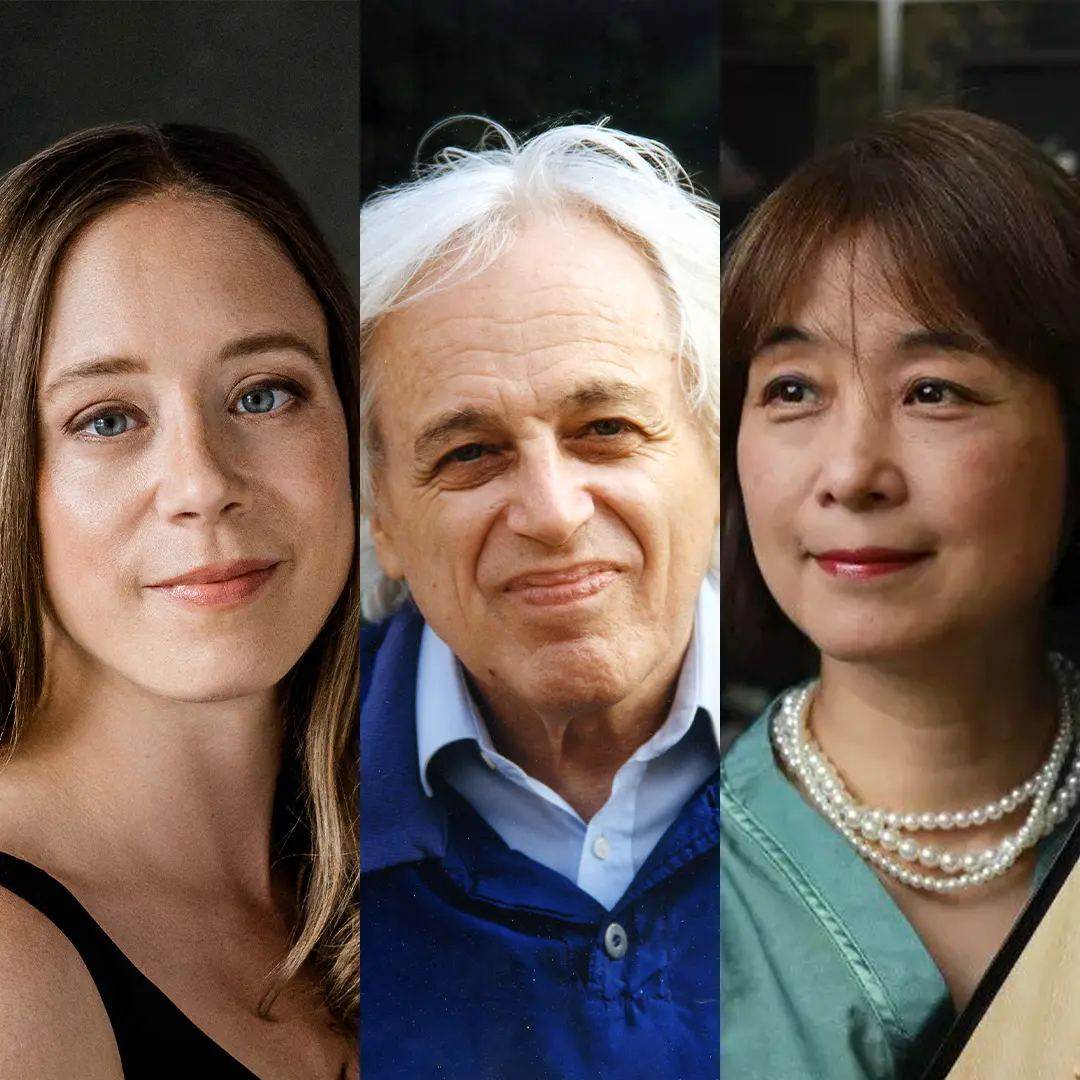
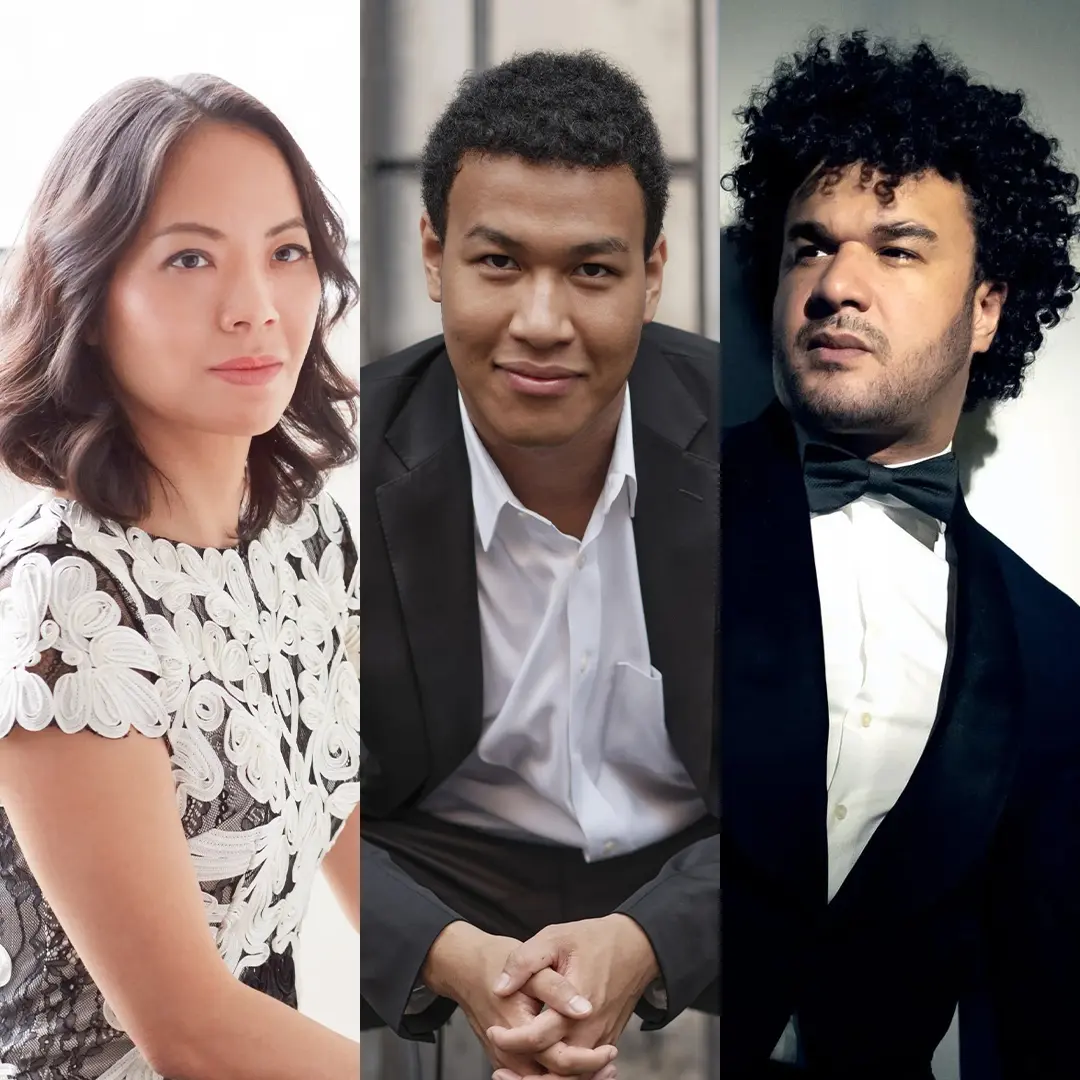
Some of the most innovative and revolutionary composers of our time embrace and elevate our “Songs from Home” theme that connects classical music with their own national heritage.
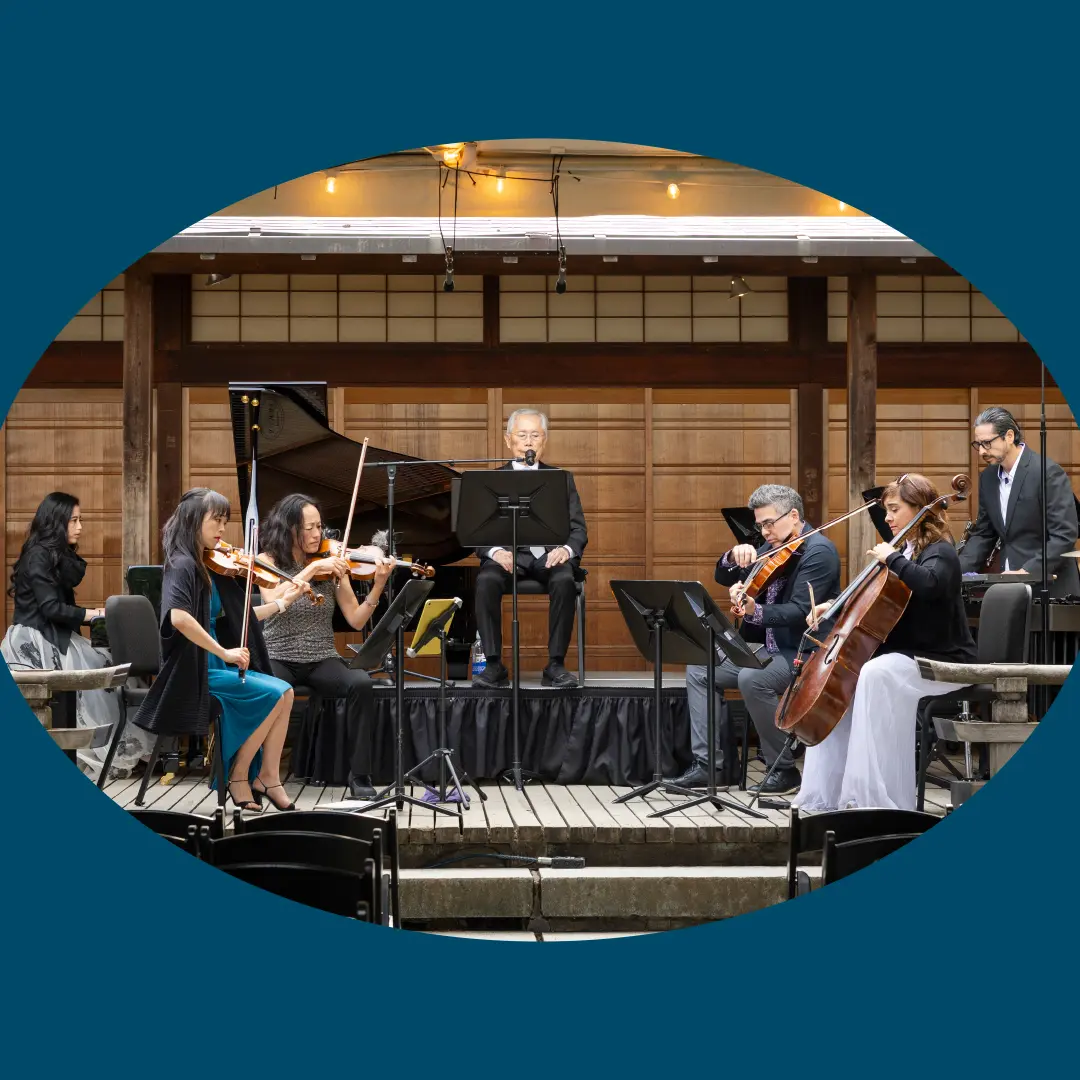
We’ll explore these sounds through Ligeti’s combination of Hungarian folk elements with modernism, as well as Wu Man’s Glimpses of Muqam Chebiyat highlighting traditions of Uyghur Muqam from China’s Xinjiang region. We will also experience works by two composers who will be with us—Portland’s own Kirsten Volness’s Shima Enaga, written for Portland pianist Yoko Greeney and connected to her Japanese heritage, and Kit Armstrong performing his own Études de dessin, inspired by Chinese ink painting and calligraphy. Our journey culminates with Armstrong performing Ligeti’s seventh Musica Ricercata on The Old Church’s incredible pipe organ.
Join us for a pre-concert musical conversation at 6 PM, then stay after the concert and meet the musicians!
Sponsored by AllianceBernstein.

Glimpses of Muqam Chebiyat was commissioned for Kronos Fifty for the Future, a project of the Kronos Performing Arts Association. The score and parts are available for free at kronosquartet.org.
The Old Church Concert Hall
Wednesday, 7/1 • 7:00 pm
Program
Click on any piece of music below to learn more about it.
- GYÖRGY LIGETI Viola Sonata
GYÖRGY LIGETI (1923–2006) Viola Sonata (20’)
I. Hora lungǎ
II. Loop
III. Facsar
IV. Prestissimo with sordino
V. Lamento
VI. Chaconne chromatiqueThe viola is seemingly just a big violin but tuned a fifth lower. In reality the two instruments are worlds apart. They both have three strings in common, the A, D, and G string. The high E-string lends the violin a powerful luminosity and metallic penetrating tone which is missing in the viola. The violin leads, the viola remains in the shade. In return the low C-string gives the viola a unique acerbity, compact, somewhat hoarse, with the aftertaste of wood, earth, and tannic acid.
Two chamber music works awoke my love of the C-string many years ago; in Schubert’s last string quartet (in G major) and in the slow movement of Schumann’s Piano Quintet the dark elegance of the viola comes to the fore also often in orchestral works by Berlioz. In 1990, I heard Tabea Zimmermann play the viola in a WDR concert in Cologne; her particularly vigorous and pithy—and yet always tender—C-string was the starting point for my fantasies of a viola sonata. With the plan of a sonata to be written later already in my head, I wrote the short viola piece Loop (now the second movement of the sonata) in 1991 as a birthday present for Alfred Schlee, the excellent publisher. In 1993 I wrote Facsar (now the third movement) in remembrance of my dear composition teacher Sándor Veress who died in Bern and who was an unjustly neglected composer—his music must be performed again! It was also in 1993 that Klaus Klein enquired about a first performance in Gütersloh and Tabea Zimmermann agreed to play the complete sonata. The movements 1, 4, 5, and 6 are therefore new; I dedicated the two outer movements to Tabea Zimmermann, the fourth movement to Klaus Klein, and the fifth to Louise Duchesneau, my colleague of many years.
1st movement Hora lungă: It evokes the spirit of Romanian folk music which, together with Hungarian folk music and that of the Roma, made a strong impression on me during my childhood. However I do not write folklore or use folkloristic quotations, it is rather allusions which are made. Hora lungă literally means “slow dance” but in the Romanian tradition this is not a dance but are sung folk melodies (in the northernmost province of the country, Maramures, in the centre of the Carpathian mountains), nostalgic and melancholy, richly ornamented. There is a striking similarity to the “Cante jondo” in Andalusia and also folk music in Rajastan. Whether this has something to do with the Roma migration or is a common, old indo-european, diatonic melodic tradition is hard to decide. This movement is played exclusively on the C-string and in it I make use of natural intervals (pure major third, pure minor seventh, and also the 11th harmonic).
2nd movement Loop: The title refers to the form; the same melodic figures are repeated, continually varied rhythmically and played progressively faster in tempo. Double-stoppings are played throughout with one of the notes always being an open string. The performer is therefore compelled to carry out daring position changes which in the fast section of the movement creates a “dangerous virtuosity”. In addition, this movement must also be played in the spirit of jazz: elegant and “relaxed.”
3rd movement Facsar: The title is a Hungarian verb meaning “to wrestle” or “to distort.” In Hungarian this word is also associated with the bitter sensation felt in the nose when one is about to cry. It is also a double-stopping movement, a type of measured dance with displaced twisted modulations: pseudo-tonal.
4th movement Presto con sordino: From a regular perpetuum mobile movement (just as in my harpsichord work Continuum) through polyrhythmic accentuation and the use of the contrasting character of the individual strings, partially concealed, illusionistic melodic fragments are gradually peeled away: more or less in the spirit of Mauritz Escher.
5th movement Lamento: Strict two-part writing mainly consisting of parallel seconds and sevenths. Indirect influence of various ethnic cultures; similar two-part writing in seconds is found in the Balkan area (Bulgaria, Macedonia, Istria), the Ivory Coast, and Melanesia (on the island of Manus).
6th movement Chaconne chromatique: Allusions to the famous Bach chaconne should not be expected! My sonata is much more unassuming, does not historicize and also cannot support monumental forms. I use the word chaconne in its original meaning: as a wild exuberant dance in strongly accentuated three-four time with an ostinato bassline.
—© György Ligeti, translation by Lindsay Gerbracht
- KIRSTEN VOLNESS “Shima Enaga”
KIRSTEN VOLNESS (b. 1980) Shima Enaga (12’)
Shima Enaga is inspired by a subspecies of long-tailed tit native to Hokkaido, Japan—a small white bird so cute, fluffy, nimble, and ephemeral, it captivates the imagination. This fantasia for flutes, piano, and electronics explores various sound worlds like the agile flocks descending and moving on, finding time for nesting (so cozy, woven with spider thread and lichen, lined with hundreds of feathers), and connecting back to my first, childhood dreams of Japan, bestowed by my tiny Casio keyboard. Commissioned by flutist Amelia Lukas and pianist Yoko Greeney with funding from the Regional Arts and Culture Council.
—© Kirsten Volness
- TRADITIONAL “Glimpses of Muqam Chebiyat”
TRADITIONAL Glimpses of Muqam Chebiyat (9’), Arr. Wu Man
I. Chebiyat Muqam – Muqaddima
II. Chebiyat Muqam – Third DastanAfter two decades of collaborating with the Kronos Quartet, I am finally beginning to understand Western string instruments. With the group’s encouragement and support, I was able to create these—my first works for string quartet.
Glimpses of Muqam Chebiyat is a two-movement suite which, taken with Two Chinese Paintings, resembles a set of portraits of traditional cultures from around China. In Chinese traditional music, instrumental pieces often have poetic titles to express their content and style. I decided to continue this tradition with this collection. The inspiration for these suites came from styles of traditional music in China familiar to me, including Uyghur Maqam of Xinjiang province, a pipa scale from the 9th century, and the Silk-and-Bamboo music, or teahouse music, from my hometown of Hangzhou.
Glimpses of Muqam Chebiyat is adapted from the Uyghur Muqam Chebiyat. In 2010, thanks to the Aga Khan Music Initiative, I had the opportunity to learn these pieces directly from the Uyghur musicians Abdullah Majnun and Sanubar Tursun.
I feel quite grateful to be able to bring these old styles of traditional music—Uyghur Muqam, Jiangnan Silk-and-Bamboo music, and ancient pipa music—into the repertoire of Western string ensembles. The left-hand portamento, or sliding, technique called for here is quite distinct from the types of expression found in Western music. I hope that audiences will come to better understand the richness and diversity of music from China through these stories.
I’d like to thank Kronos for their trust and encouragement, for letting me be a part of their Fifty for the Future project, and for giving me this opportunity to share my musical experiences with young string quartets around the world!
—© Wu Man
Glimpses of Muqam Chebiyat was commissioned for Kronos Fifty for the Future, a project of the Kronos Performing Arts Association. The score and parts are available for free at kronosquartet.org.
- KIT ARMSTRONG “Études de dessin”
KIT ARMSTRONG (b. 1992) Études de dessin (5’)
For centuries, music and painting have been subject to aesthetic parallels and shared inspirations. When I think of painting, I see the art of drawing as not only its foundation, but its heartbeat. It was my wish in Études de dessin to translate the expression of drawing into the world of music.
Colour and texture often go together in music. This applies especially to the piano, whose potential is realised through creating acoustic illusions—that a note appears to lead to another, or that touch informs the character of a sound. It may even be the very disconnect between acoustic reality and perception that can elevate piano music to a magical experience. I am immediately reminded of ink drawings where, similarly, the dissociation from optical reality allows a paradoxical feeling of being closer to its essence.
Fundamental in both cases is the invitation to let technical details blossom, in the beholder’s imagination, into sentiments. A brushstroke becomes expressive not only through such attributes as smoothness and elegance; it may project intimations of character that are so abstract and yet so personal, as only a series of tones could otherwise do.
—© Kit Armstrong
- GYÖRGY LIGETI “Musica Ricercata,” No. 7
GYÖRGY LIGETI Musica Ricercata, No. 7 (5’)
If you had to re-start music history from scratch, what music would you write? How many notes would you use? What rhythms?
These are the sorts of base-level questions that Hungarian composer György Ligeti (1923–2006) sought to explore in his 1953 Musica Ricercata (Researched Music). Each of these 11 pieces for solo piano uses only a limited number of pitches, from two in the first piece to 12 in the last. By restricting his musical building blocks, he hoped to “evolve” a new style from the ground up, without reference to anything that came before.
Accordingly, Musica Ricercata, No. 7, only includes eight unique pitches. Five of them occur in the left hand’s ostinato (repeated) melody, performed “evenly, without any accent and independently of the right hand’s rhythm.” Meanwhile, the right hand explores the contours of a rough, folklike melody. Each performance should be unlike any other, as the two melodies come together and apart in spontaneous, unexpected ways.
—© Ethan Allred
Artists
-
 Kit Armstrong
Piano/Organ
Kit Armstrong
Piano/Organ
-
Ever since Kit Armstrong entered the international music stage twenty years ago, his activities have exerted an enduring fascination upon music lovers. He performs recitals in major series, appears with the world’s finest orchestras, and has developed close artistic partnerships with leading instrumentalists and vocalists. He has held artist-in-residence appointments incorporating a wide spectrum of musical formats, combining his roles as composer, pianist, conductor, and organist. His project, Expedition Mozart, traverses Mozart’s music in various genres with an international group of distinguished chamber musicians and soloists—and has become a main feature at prestigious festivals and venues.
Armstrong came to classical music through composition at the age of five. He has since created a broad oeuvre of vocal, instrumental, chamber, and symphonic works, many of which have been commissioned by notable European cultural institutions. His compositions are published by Edition Peters.
Born in 1992 in California, USA, Armstrong pursued undergraduate studies in physics at California State University, chemistry, and mathematics at the University of Pennsylvania and mathematics at Imperial College London. Alfred Brendel has guided Armstrong as a musical mentor since 2005. In 2008, he earned a bachelor’s degree in music at the Royal Academy of Music, London, and in 2012 a master’s degree in pure mathematics at the University of Paris VI.
In 2012, Kit Armstrong purchased the Church of Sainte-Thérèse in Hirson, France, and transformed it into a hall for concerts, exhibitions, and outreach. This cultural centre has become home to interdisciplinary projects, reaching a regional as well as cosmopolitan public.
Upcoming Concerts & Events
- NEW@NIGHT: Echoes of Home (currently selected)
- Jazz Notes: Gershwin Piano Concerto
- FREE Open Rehearsal: Dvořák “Dumky” Piano Trio
- Folk Voices: Dvořák “Dumky” Trio
- SPECIAL EVENT | An Evening with Kit Armstrong: Liszt’s Pilgrimage
-
 Nicholas Cords
2026 YAI Faculty, Viola
Nicholas Cords
2026 YAI Faculty, Viola
-
For three decades, omnivorous violist Nicholas Cords has been on the front line of a unique constellation of projects as performer, educator, and cultural advocate, with a signature passion for the cross section between the long tradition of classical music and the wide range of music being created today.
Nicholas served for twenty years as violist of the Silkroad Ensemble, a musical collective founded by Yo-Yo Ma in 2000 with the belief that cross-cultural collaboration leads to a more hopeful world. This mission was poignantly explored by the recent Oscar-nominated documentary by Morgan Neville, The Music of Strangers, which makes a case for why culture matters. In addition, Nicholas served from 2017-2020 as a Co-Artistic Director for Silkroad, and previously as Silkroad’s Programming Chair. He appears on all of the Silkroad Ensemble’s albums including Sing Me Home (Sony Music), which received a 2017 Grammy Award for Best World Music Album.
Another key aspect of Nicholas’s musical life is as founding member of Brooklyn Rider, an intrepid group which NPR credits with “recreating the 300-year-old form of the string quartet as a vital and creative 21st-century ensemble.” Highly committed to collaborative ventures, the group has worked with Irish fiddler Martin Hayes, jazz saxophonist Joshua Redman, ballerina Wendy Whelan, Persian kemancheh virtuoso Kayhan Kalhor, Swedish mezzo-soprano Anne Sofie von Otter, Mexican singer Magos Herrera, and banjoist Béla Fleck, to name a few. Their most recent recording, Healing Modes, was lauded by The New York Times and received a 2021 Grammy Nomination.
His acclaimed 2020 solo recording, Touch Harmonious (In a Circle Records), is a reflection on the arc of tradition spanning from the baroque to today, featuring multiple premieres. A dedicated teacher, Nicholas currently serves on the viola and chamber music faculty of New England Conservatory.
Upcoming Concerts & Events
- NEW@NIGHT: Echoes of Home (currently selected)
-
 Yoko Greeney
Piano
Yoko Greeney
Piano
-
Collaborative pianist and visionary arts advocate Yoko Greeney has been hailed as “one of the most significant members of Portland’s classical music scene” (Oregon ArtsWatch). Her multifaceted career—spanning performing, directing, program curating, teaching, and community-based work—is rooted in a deep commitment to artistic excellence and arts accessibility.
At the heart of Greeney’s work is collaboration—onstage and beyond. Celebrated for her sensitivity and stylistic range, she is a sought-after collaborative pianist who has performed at numerous venues and music festivals. Since settling in Portland, Oregon in 2010, she has shared the stage with a wide range of organizations, including the Oregon Symphony, Chamber Music Northwest, 45th Parallel Universe, Oregon Ballet Theatre, BodyVox, and Third Angle New Music, in addition to numerous live performances and recording projects with All Classical Radio.
A passionate advocate for arts accessibility, in 2022 Greeney co-founded SoundsTruck NW, a nonprofit organization that brings outdoor live music concerts directly to neighborhoods and communities where access is limited by utilizing its custom-built, solar-powered mobile stage. Described as “revolutionizing Portland’s concert landscape” (The Oregonian), SoundsTruck NW has been recognized internationally for its social impact, including being named a finalist for the 2024 SXSW Innovation Awards in Urban Design and a two-time prize winner at the 2024 International Sound Awards in Hamburg, Germany.
Originally from Osaka, Japan, Greeney has followed a global path—living and working in cities across Japan, Mexico, and the United States—before making Portland her home. She holds a Master’s degree from the Peabody Conservatory of The Johns Hopkins University and currently teaches at Lewis & Clark College.
Upcoming Concerts & Events
- Jazz Notes: Gershwin Piano Concerto
- FREE Open Rehearsal: Joan Tower “Petroushskates”
- NEW@NIGHT: Across the Americas
- NEW@NIGHT: Echoes of Home (currently selected)
- Voices of Our Land: Dvořák “American” Quintet
- Voices of Our Land: Dvořák “American” Quintet
- Americana: “Appalachian Spring”
- Americana: “Appalachian Spring”
-
 Amelia Lukas
Flute
Amelia Lukas
Flute
-
Powell Flutes Artist Amelia Lukas performs with “a fine balance of virtuosity and poetry” (The New York Times) and “excels at bringing drama and fire to hyper-modernist works with challenging extended techniques” (Oregon ArtsWatch). Recent solo engagements include her show “Natural Homeland” at the Alberta Rose Theatre and throughout the West Coast, and performances for Portland Japanese Garden, United for Ukraine, World Beat Festival, New Music Gathering, Siletz Bay Music Festival, Fear No Music, Friends of Chamber Music, Makrokosmos Project, Kenny Endo Ensemble, Portland Taiko, All Classical Portland’s live radio broadcasts, and on American Public Media’s Performance Today. In addition to her work with Lyra Trio PDX, she has featured in chamber music performance with the Oregon Bach Festival, Portland Piano International, Okaidja Afroso, 45th Parallel, and Willamette Valley Chamber Music Festival.
Lukas’s career includes founding the “truly original… impeccably curated” (Time Out New York) multimedia chamber series Ear Heart Music, membership in the American Modern Ensemble, and performances at Carnegie Hall, Lincoln Center, The Stone, Bargemusic, (Le) Poisson Rouge, Roulette, and New Music New York Festival. She holds degrees from the Royal Academy of Music (London), where she received three prizes for musical excellence, and from the Manhattan School of Music, where she was a founding class member for the Master’s degree in Contemporary Performance.
Amelia received the President’s Volunteer Service Award from former President Biden for her work supporting Ukraine and offers creative strategy and public relations services as the Principal and Founder of Aligned Artistry.
Upcoming Concerts & Events
- NEW@NIGHT: Echoes of Home (currently selected)
- Jazz Notes: Gershwin Piano Concerto
-
 Viano Quartet
String Quartet, Past Protégé Ensemble
Viano Quartet
String Quartet, Past Protégé Ensemble
-
Lucy Wang, violin
Hao Zhou, violin
Aiden Kane, viola
Tate Zawadiuk, celloPraised for their “virtuosity, visceral expression, and rare unity of intention” (Boston Globe), the Viano Quartet has quickly soared to international acclaim as one of the most dynamic and in-demand string quartets of their generation. The ensemble has captivated audiences worldwide ever since they were awarded First Prize at the 13th Banff International String Quartet Competition, with appearances at renowned venues such as Lincoln Center in New York, Berlin’s Konzerthaus, Toronto’s Koerner Hall, Hong Kong’s City Hall, and London’s Wigmore Hall. The Viano Quartet are Bowers Program Artists at The Chamber Music Society of Lincoln Center from 2024–2027.
Viano Quartet’s 2025–26 season includes debut performances at London’s Southbank Centre, the Frick Collection in New York, Dublin’s National Concert Hall, Vivo Performing Arts, Coast Live Music, Friends of Chamber Music Kansas City, Apex Concerts, the Amelia Island Chamber Music Festival, the Fortas Series at the Kennedy Center, Premiere Performances HK, and a mainstage full recital debut at the Chamber Music Society of Lincoln Center. This season also features collaborations with Avi Avital, Sir Stephen Hough, Gilbert Kalish, Anthony McGill, Miloš Karadaglić, and Vienna Teng. The quartet will premiere a newly written piece by composer Reena Esmail in the summer of 2026.
In 2025, the quartet received the Avery Fisher Career Grant as well as released their first full-length album, Voyager, with Apple Music/Platoon Records.
The Viano Quartet was formed in Los Angeles at the Colburn Conservatory of Music in 2015. The quartet is grateful for the unwavering support from their mentors at the Curtis Institute and Colburn Conservatory.
Upcoming Concerts & Events
- SOLD OUT | Chamber Party | Stars & Strings: A Celebration with the Viano Quartet at Pittock Mansion
- Viano Quartet & Nina Bernat
- Folk Voices: Dvořák “Dumky” Trio
- NEW@NIGHT: Echoes of Home (currently selected)
- Jazz Notes: Gershwin Piano Concerto